Leave the spare item behind, or keep it because the consequences of needing it could be serious? That question belongs at the center of every field check. The goal is not to carry every possible solution, but to carry what supports safety, legal compliance, comfort and responsible decisions. A brief review at the vehicle can reveal dead batteries, poor-fitting layers, damaged straps and unnecessary duplicates before they become trail problems.
Start with the day's actual plan
At the trailhead before first light, with a modest pack, a changing forecast and several hours ahead, the first decision is not whether to add equipment. It is whether the planned outing still matches the conditions in front of you.
Check the route, expected time outside, terrain, visibility and temperature range. Then consider what would change if you moved more slowly, returned after dark or had to wait out rain. A short walk near a maintained access road may require a different load from a remote day over uneven ground. For hunting, the land, season, method, access rules and retrieval plan should shape the list.
Lightweight gear earns its place when it results from choosing fewer, better-matched items-not from removing protection against a realistic problem. A rain layer, water-treatment method, navigation backup or first-aid item may deserve space even if you are unlikely to use it.
Separate essential safety items from convenience
Lay everything out and group it by purpose: navigation and communication, weather protection, hydration, first aid, food, field tools and personal necessities. If two items do the same job, decide whether the backup is justified by the consequences of failure, the distance from help or the length of the outing.
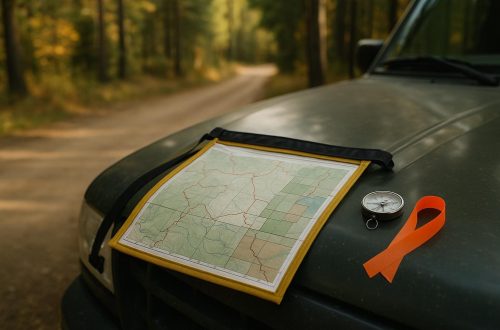
A phone is not automatically a complete navigation or emergency plan. Confirm its charge, protect it from moisture and consider whether the route has reliable reception. If you carry a paper map, compass, satellite communicator or other device, know how to use it before leaving the vehicle. Safety equipment helps only when it is accessible and usable under stress.
Use this short outdoor safety checklist before shouldering the pack:
– Confirm the route, access permissions, weather and return plan.
– Check that communication and navigation tools are charged, protected and understood.
– Carry suitable layers, water, food and a basic first-aid kit for the conditions.
– Tell a trusted person where you are going and when to expect contact.
– Verify that required licenses, permits, tags and identification are present.
– Remove damaged, duplicated or unneeded items.
The checklist is deliberately plain. A complicated system is harder to repeat, especially when an early start or busy schedule encourages shortcuts.
Inspect the equipment that quietly fails
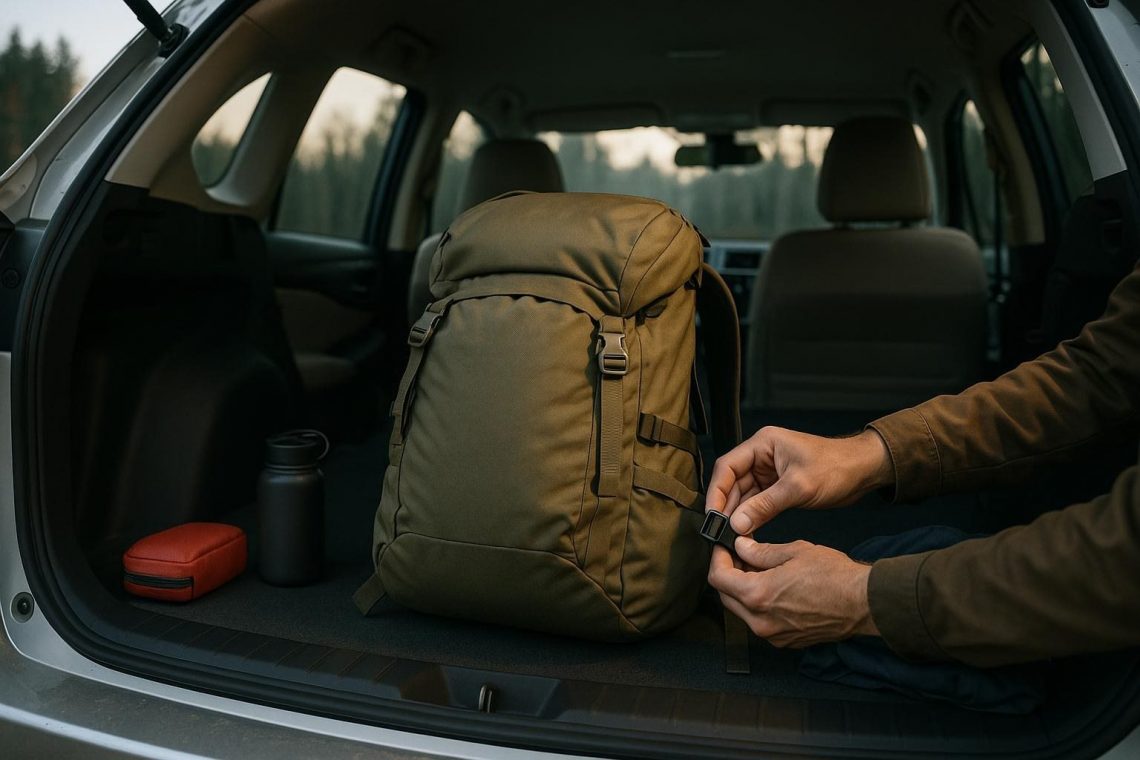
Examine the small connection points before a minor defect becomes a remote problem. Run your hands along pack straps and buckles. Look for frayed webbing, split seams, loose stitching and zippers that no longer close smoothly. Check footwear for worn tread, separated soles or wetness inside. A defect found at home is easier to address than a broken strap several miles from the vehicle.
Check batteries separately. Replace or recharge them according to the device maker's guidance rather than discovering that a light or communication device is empty when visibility drops. Inspect water containers for leaks and clean them as directed. Open first-aid supplies and replace anything used, contaminated or no longer usable.
Maintenance need not become a weekend project. A few minutes after each outing can prevent dirt, moisture and neglect from becoming expensive or unsafe failures. Dry wet equipment fully before storage, follow care instructions for technical fabrics and keep sharp tools protected. Do not improvise repairs on safety-critical equipment if the repair could fail under load.
Let conditions change the load, not anxiety
Forecasts and ground conditions are inputs, not guarantees. If rain, heat, wind or cold is expected, review what protects your ability to stay comfortable and make sound decisions. Add insulation or water protection when the risk is credible; do not fill every pocket because the forecast is uncertain.
The same judgment applies to food and water. Carry enough for the planned outing and a reasonable delay, recognizing that requirements vary with exertion, heat, access and individual needs. A heavy pack can create problems of its own by increasing fatigue, awkward movement and the temptation to ignore warning signs.
At the trailhead, pause for a final fit check. The load should sit securely, frequently used items should be reachable without emptying the pack, and nothing should interfere with safe movement or observation. If an item cannot be justified by the route, conditions, safety, legal duties or a clear personal need, it may belong back in the vehicle.
Recheck rules, access and ethical duties
A sound field gear audit includes more than equipment. Before hunting or entering managed land, confirm current hunting regulations, seasons, legal methods, licensing requirements, access restrictions and other local rules for the specific area. Requirements can change, and general advice cannot replace current information from the relevant official wildlife, land-management or public-safety authority.
Carry only what you are legally allowed and practically prepared to use. Know the property boundaries, respect closures and do not assume a familiar area follows the same rules as another. If uncertain, stop and verify before proceeding rather than treating an old license, map or memory as sufficient.
Responsible recreation also appears in small choices. Keep waste contained, avoid damaging vegetation, use established access where appropriate and leave gates, habitat and water sources as you found them. Plan how you will handle harvested material, used supplies and an unexpected delay without burdening other visitors or the land.
Back at the vehicle, note what was missing, what never left the pack and what failed inspection. Make one adjustment for the next outing. Repeating that modest review turns preparation into a practical habit: lighter where it can be, more capable where it matters, and grounded in safety, stewardship and current rules rather than habit or hype.